Rainwater harvesting and tank cleaning belong together. A roof in Karachi can collect thousands of litres in a single monsoon spell, but that water is only useful if the tank it goes into is clean, covered and separate from anything it could contaminate. Sustainable living in a water-short city comes down to three habits: catch what falls, keep what you store clean, and stop wasting what you have.
We clean storage tanks, including rainwater tanks, across Karachi. This guide looks at harvesting from the storage end: which system suits a house here, how to set it up so the water stays usable, and how to look after the tank.
Understanding Rainwater Harvesting
Rainwater harvesting means collecting rain from a roof or paved surface and either storing it for use or sending it into the ground to recharge the aquifer.
Karachi is a dry city with a short, intense monsoon. Nearly all its rain falls between July and September, and some years bring very little. When it does rain, it pours: August 2020 delivered 484 mm, the wettest August since 1931 (Wikipedia). That water floods streets and runs to the sea while the city receives only about 650 of the 1,200 million gallons it needs each day (Geo News).
How much can a roof collect?
One millimetre of rain on one square metre of roof gives one litre. Allow for about 20% lost to splash and evaporation.
| Roof | 50 mm spell | 200 mm season | 484 mm (August 2020) |
|---|---|---|---|
| 120 sq yd (about 100 m²) | 4,000 L (880 gal) | 16,000 L (3,500 gal) | 38,700 L (8,500 gal) |
| 240 sq yd (about 200 m²) | 8,000 L (1,760 gal) | 32,000 L (7,000 gal) | 77,400 L (17,000 gal) |
| 400 sq yd (about 335 m²) | 13,400 L (2,950 gal) | 53,600 L (11,800 gal) | 129,700 L (28,500 gal) |
A single 50 mm spell on a 120 square yard roof is close to a 1,000-gallon tanker. The benefits and the economics are set out in the benefits of installing a rainwater harvesting system.
Types of Rainwater Harvesting Systems
1. Rooftop collection with storage
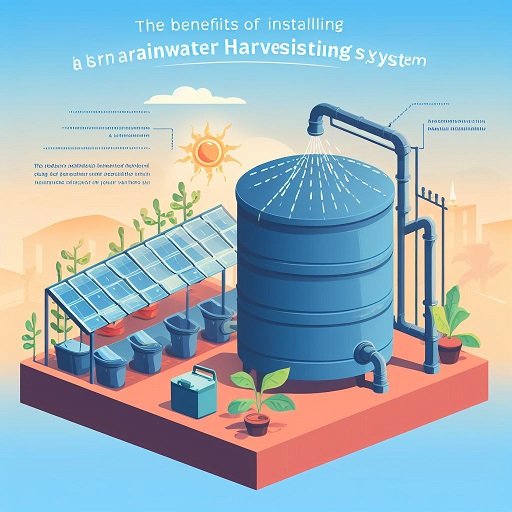
Gutters and downpipes lead roof water through a filter into a tank. The stored water is used for washing, flushing, cleaning and the garden. This is the simplest system for a house and the one this article concentrates on.
2. Rooftop collection with groundwater recharge
Roof water is filtered and sent down a recharge well or pit to refill the aquifer. Several water experts in Pakistan argue that recharge is a better use of rain than concrete storage tanks, because the ground holds far more than any tank and many cities are pumping their aquifers dry (Dialogue Earth).
3. Surface run-off recharge
Rain collecting on roads and open ground is channelled into recharge wells through layers of sand and gravel. This works at street and neighbourhood scale.
4. Reuse systems
Not rain, but the same idea: capture clean-enough water before it reaches the sewer. Ablution water, air-conditioner condensate and washing-machine rinse water can all be reused for gardens and flushing.
Setting Up a Rainwater Harvesting System
The parts
- Catchment. A clean roof. Concrete and tiled roofs are fine. Keep it swept, and keep pets, plant pots and stored junk off the collecting area.
- Gutters and downpipes. With leaf screens at the top.
- First-flush diverter. The first rain washes months of dust, soot and bird droppings off the roof. A diverter sends the first one to two litres per square metre of roof to waste before any water enters the tank.
- Filter. A mesh or sand-and-gravel filter before the tank inlet.
- Storage tank. Opaque, covered, with a screened overflow and a tap or pump for drawing water.
- Overflow route. To a recharge pit, garden or drain, away from the house foundations.
Where to store it
Use a separate tank for rainwater. Do not pipe raw roof water straight into the underground tank that holds your drinking supply. Roof run-off carries droppings and dust, and one dirty downpour would contaminate everything. If the two must be connected, the rainwater should pass through the first-flush diverter and filter, and the tank should be disinfected after the monsoon.
A plastic tank at ground level beside the downpipe is the usual choice. Size it for what one or two good spells will deliver, not for the whole season. See choosing the right size water tank, choosing the right tank material and choosing the right location.
What to use the water for
- Without treatment: garden, car washing, floor washing, toilet flushing.
- With filtration and disinfection: laundry and bathing.
- For drinking: only after proper filtration and boiling or disinfection, and only if the roof and tank are well kept.
Tank Cleaning for Sustainable Living
A rainwater tank fills fast and then sits for weeks, in the hottest and most humid part of the year. Without care, it becomes a mosquito nursery and a tank of green water.
Before the monsoon (June)
- Sweep the roof and clear gutters and screens.
- Clean and disinfect the rainwater tank so it starts the season empty and clean.
- Check the first-flush diverter and the mesh on every opening.
During the monsoon
- Empty the first-flush chamber after each spell.
- Check lids after storms.
- Use the water. Stored rain is best used within a few weeks.
After the monsoon (September to October)
- Clean out the sediment that has collected on the tank floor.
- Clean your main underground and overhead tanks as well. This is the best time of year for it, because rain pushes silt and sewage into supply lines. See the best time to clean your water tank.
All year
Every storage tank, whatever it holds, needs the same basics: an opaque body, a sealed lid, screened openings and a full cleaning every 6 months. See how often to clean your water tank, preventing algae growth and how to maintain your tank after cleaning. The cleaning method itself, from draining to disinfection, is on our service procedure page.
Cleaning without waste
Clean tanks when they are nearly empty so little water is thrown away, send sludge and chlorinated wash water to a proper drain, and use the right amount of disinfectant. More in eco-friendly products for tank cleaning and waste disposal after tank cleaning.
Sustainable Living Practices
- Fix leaks and overflows. A stuck float valve can waste more water in a week than a rain tank saves in a month. See detecting and preventing leaks.
- Reuse rinse water. Washing-machine rinse water is fine for mopping and flushing.
- Collect air-conditioner condensate. A two-tonne unit running 8 to 10 hours in humid weather can produce 18 to 27 litres of water a day (Dialogue Earth). It is good for plants and cleaning, not for drinking.
- Use a bucket, not a hose, for cars and floors.
- Fit low-flow taps and dual-flush cisterns when you next replace fittings.
- Keep sweet water for the kitchen and use boring or harvested water for everything else.
- Consider a solar pump if your roof has the space. See solar-powered pumps for water tank systems.
Examples from Karachi and Pakistan
- Mosques saving ablution water. Since 2024, a project led by Dr Syed Imran Ahmed of the Panjwani Hisaar Water Institute at NED University has been diverting used ablution water from mosques into recharge wells instead of the sewer. It began at Jamia Uloom Islamia Banuri and by mid-2025 more than 20 mosques across Karachi had joined (Arab News).
- Street-level recharge wells. Karachi resident Muhammad Amaan Kakakhel has built recharge wells that take rainwater from roads through layers of sand and gravel into the ground. In 2022 his welfare society reported around 32 projects in the city (ProPakistani).
- Mandatory harvesting in Islamabad. The Capital Development Authority has required rainwater harvesting systems in new houses above 400 square yards since 2010, and withholds completion certificates without one (Dialogue Earth). Karachi has no equivalent rule yet.
Challenges and Solutions
| Challenge | Solution |
|---|---|
| Rain comes in a few big spells, then nothing for months | Size storage for one or two spells and send the overflow to a recharge pit |
| Dirty roofs and polluted air | First-flush diverter, roof sweeping before the season, non-drinking uses |
| Mosquitoes and dengue | Sealed lid, mesh on every opening, use the water within weeks |
| Algae in stored water | Opaque tank, kept shut |
| Small plots with no room for another tank | Slimline or roof-level tank, or recharge instead of storage |
| Risk of contaminating the drinking tank | Keep rainwater separate, or filter and disinfect before mixing |
| Upfront cost | Start with one downpipe, a screen and a drum, and expand |
Future of Sustainable Living in Karachi
The pressure on Karachi’s water will keep growing. Rainfall is becoming more erratic, with longer dry periods and heavier bursts, and the gap between supply and demand has not closed. We look at this in the impact of climate change on water tanks in Karachi.
Large fixes are the government’s job. What households, mosques, schools and apartment unions control is their own roof, their own tanks and their own taps. Collecting rain, recharging the ground and keeping storage clean are small steps that add up across a city of more than 20 million people.
Frequently Asked Questions
Is it worth harvesting rainwater in a city as dry as Karachi?
Yes, on a modest scale. A few good spells can supply a house’s washing and garden needs through the monsoon and reduce flooding at your gate. It will not replace your main supply.
Can I let rainwater run into my underground tank?
Not directly. Use a first-flush diverter and a filter, and disinfect the tank after the season. A separate tank is safer.
Can I drink harvested rainwater?
Only after filtration and boiling or disinfection. Roofs in a city carry dust, soot and bird droppings.
How often should a rainwater tank be cleaned?
Before the monsoon and after it, which fits the normal 6-month schedule.
How do I stop mosquitoes breeding in the tank?
Seal the lid and cover every vent, inlet and overflow with fine mesh.
Keep Your Storage Clean
Call or WhatsApp 0313-2796778 to have rainwater, underground or overhead tanks cleaned. We work across Karachi, including Scheme 33, Malir and Bahria Town. Rates are on our charges page, and the calculator on the home page gives an instant rate for your house.
About the author: Ahmar Shoaib is the founder of Karachi Tank Cleaning. He holds a BS in Chemical Engineering from Karachi University and has run the company’s cleaning and disinfection work since 2007. This article follows our editorial policy.
Sources: Wikipedia, 2020 Karachi floods; PCRWR figures reported by Geo News (May 2025); Dialogue Earth, Can rainwater harvesting fix Pakistan’s urban flooding problem? (October 2020); Arab News, In parched Karachi, mosques give back to the earth by saving ablution water (June 2025); ProPakistani, Karachi resident introduces rainwater harvesting technique (August 2022).