📞 Open 24 hours. Call for same-day service
☎️ 0313-2796778

How We Work Safely in Water Tanks

A water tank is a confined space. This page sets out what our team does before and during the work, and how the precautions grow with the size of the tank.

Why Tank Cleaning Needs a Safety Procedure
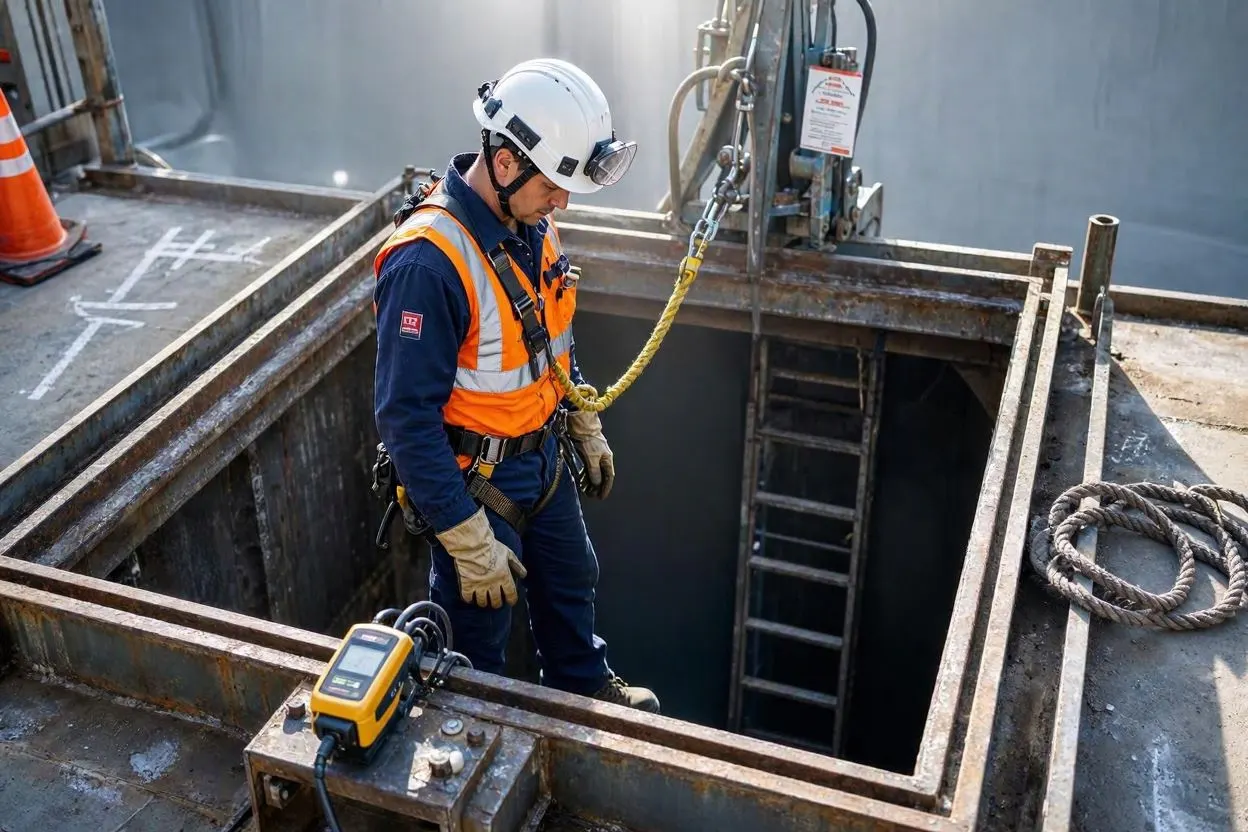
A Karachi Tank Cleaning worker in safety gear at the opening of an underground water tank

Most of the risk in this work is out of sight. A closed underground tank can hold stale air with too little oxygen, or gas that has collected over months. Floors are slippery with sludge. Overhead tanks sit on rooftops, at a height. Pumps and motors run on electricity, right next to water.

The WHO technical note on cleaning water storage tanks warns that getting into a tank and working inside it can be difficult and dangerous. Its advice is to blow fresh air into the tank before anyone enters, to wear protective clothing, and to keep someone outside the tank for the whole time a person is inside.

When Ahmar Shoaib started this company in 2007, most tank cleaning in Karachi was done with none of that. Putting a safe method in place was one of the reasons he started it. Today the company holds ISO 45001 certification, the international standard for occupational health and safety.

Safety Is Matched to the Tank

A 400-gallon rooftop tank and a 400,000-gallon factory tank are not the same job. The crew and the equipment are chosen for the site.

Rooftop and overhead tanks

Small Household Tanks

  • Gloves, boots, goggles and waterproof clothing
  • Safe access to the roof and the tank
  • Electrical equipment kept dry and away from the water
  • Nothing extra is needed for a tank this size

Below ground

Underground Tanks

  • The tank is opened and aired before anyone goes in
  • One man stays outside for as long as someone is inside
  • Lighting for the inside of the tank
  • Protective gear as above

Large and deep tanks

Factory and Commercial Tanks

  • A site survey before the job is planned
  • Gas detection and ventilation fans
  • Safety harness, lifeline and retrieval equipment
  • Respirators, radios and a larger crew

Before Anyone Enters an Underground Tank

Underground and RCC tanks are where the precautions matter most. This is the order they are taken in.

  1. The tank is opened and ventilated

    The cover comes off and the tank is left to air. On deep and large tanks, fans blow fresh air in, and they keep running through every phase of the work.

  2. The air is tested

    On deep and large tanks, a gas detector checks the oxygen level and looks for toxic and flammable gas before entry. The air is checked again at intervals while the work goes on.

  3. One man stays outside

    A safety attendant is stationed at the opening for the whole time someone is inside. His only job is to watch and to raise the alarm.

  4. Retrieval equipment is ready

    In a deep tank the worker wears a harness on a lifeline, so that he can be brought out without anyone else having to go in after him.

  5. Electricity is kept away from water

    Power connections are protected against earth faults, equipment is grounded and checked before use, and no connection is made inside a wet area.

If conditions are not safe, we stop

We do not trade safety for speed or cost. If the air in a tank is not safe, or the access is not safe, the work waits until it is.

Safety Equipment We Use

Not every item is needed on every job. Each is brought when the tank calls for it.

Protective Clothing

Safety goggles, chemical-resistant gloves, waterproof overalls and steel-toe boots.

Respirators

Full-face respirators with cartridges, for protection when chemicals are in use.

Ventilation Fans

Industrial fans that keep fresh air moving through a confined space.

Gas Detectors

Monitors for oxygen level and toxic gas in underground tanks.

Fall Protection

Safety harnesses, lifelines and retrieval systems for deep tanks.

Lighting

Lighting made for enclosed spaces, so the crew can see every corner of the tank.

Emergency Equipment

A first-aid kit, eyewash and rescue equipment on site.

Radios

Two-way radios, so the man inside and the man outside stay in contact.

Protecting Your Home and Family

Safety is not only about our own team. The work happens at your house or your premises, so the same care covers your property.

Chemicals

Disinfectants are kept in labelled containers, mixed to the stated ratio, and rinsed out of the tank before it refills. The details are on our cleaning chemicals page.

Waste water and sludge

Dirty water and sludge are pumped and vacuumed out of the tank and directed to a proper drain, not left on your roof or in your compound.

When the job is done

The tank cover is closed, the equipment is cleared away, and you are asked to look inside the tank yourself before you pay.

Training and Certification

Equipment only helps in trained hands.

ISO 45001

The company is certified to ISO 45001, the international standard for occupational health and safety. The certificate is valid to August 2028. See our certificates

Confined Space Training

Workers who go into underground and RCC tanks are trained in confined space entry: ventilation, air testing, and how a rescue is carried out.

Equipment and Chemicals

Technicians are trained to run high-pressure washers at 2,000 to 3,000 PSI, and to handle and mix disinfectants safely.

First Aid

Our staff receive first-aid training, so that someone on the job can respond straight away if a person is hurt.

Questions About Safety

Is it safe to clean an underground water tank yourself?

We advise against going into an underground tank yourself. It is a confined space. The air inside can be low in oxygen or hold harmful gas, and you cannot tell by smell. If you need to look inside, do it from the opening, and never let anyone enter alone.

What safety equipment does your team bring?

It depends on the tank. Every job has protective gear: gloves, boots, goggles and waterproof clothing. Deep underground tanks and factory tanks add ventilation fans, gas detection, a safety harness with a lifeline, respirators and extra lighting.

Is Karachi Tank Cleaning certified for safety?

Yes. The company holds ISO 45001 certification, the international standard for occupational health and safety, valid to August 2028. You can see it on our certificates page.

Are your staff trained in first aid?

Yes. Our staff receive first-aid training, and a first-aid kit is carried on the job.

Do you follow our factory's own safety rules?

Yes. Where a commercial or industrial client has its own site safety rules, we work under them. This is agreed at the free survey, before the job is booked.

What should I do at home while the tank is being cleaned?

Keep children and pets away from the open tank and the equipment while the team is working. When the job is finished, the team closes the tank cover before leaving.

Written by Ahmar Shoaib, founder of Karachi Tank Cleaning. He holds a BS in Chemical Engineering from the University of Karachi and has run the company since 2007. Last updated .

Source: World Health Organization, Cleaning and disinfecting water storage tanks and tankers (Technical Note 3, 2013).

Book a Tank Cleaning

See your rate online in under a minute, or call us to arrange a free survey for a larger tank.

Get an Instant Quote 📞 Call 0313-2796778 💬 WhatsApp Us
📞 💬